
Time For A Change: New Poll Heralds Looming Job Migration

It’s found in a number of classic tunes. Mick Jagger belted out “when I saw it was a time for a change.” Then there was the Little River Band’s “time for a cool change.” And, of course, we remember Bob Dylan’s anthem announcing that “the times, they are a-changing.” Many of us have felt that tug within, yanking us toward something or some place different. That is the very sentiment now being experienced by many in the healthcare industry.
According to a survey recently released by the Harris Poll, a sizeable percentage of American healthcare workers are seriously considering moving on to new vistas. The survey, which was commissioned by education services company Strategic Education, polled 1,504 frontline healthcare employees and 304 employers between June 26 and July 21 of this year and found “widespread burnout, dissatisfaction and a high attrition risk,” according to Reuters.
An Ominous Trend
According to Business Wire, the survey found that the healthcare workforce remains burnt out, “with many planning their exits at the same time the U.S. is projected to have a shortage of nearly 700,000 critical healthcare workers, including physicians, RNs and LPNs by 2037.” The Wire went on to report:
The poll, which surveyed both healthcare employees and employers found that 8 in 10 healthcare workers (84%) feel that they are taken for granted. Over half (55%) admit that they’ll look for job openings, interview for, or switch to a new role in the next year.
According to the U.S. Department of Health and Human Services, 66% of rural or partially rural counties are Health Professional Shortage Areas. To clarify, these are geographic areas where the demand for healthcare services outstrips the available supply of providers.
Here are some findings from the survey, according to the sponsoring entity:
Healthcare workers feel undervalued and under supported.
- Less than 1/3 of healthcare employees feel very valued by their current employer or very loyal to them.
- Only 1 in 5 healthcare employees feel their employer is very invested in their long-term career success beyond their current role.
The healthcare talent pipeline is leaking fastest among Gen Z and Millennials.
- Employers report that younger, early-career employees and nursing assistants/personal care aides are the hardest individuals or roles to retain (43% and 42%, respectively).
As AI accelerates, so does the burden of keeping up.
- AI is the #1 clinical/technical skill healthcare employees expect to need in the next five years (43%).
- 42% of employees worry AI will replace some aspects of their job.
- Employers identify AI skills training as an organizational priority (92%), but 60% report that it’s difficult to find the right resources to provide training for these skills on the job.
All this is concerning, but is there any good news?
A Sliver of Hope
According to the survey sponsor, employees and employers agree that education and advancement opportunities could encourage workers to stay. Some 63% of healthcare employees agree that they’d be more likely to stay with their employer if tuition support were provided, and 48% of employers note that lack of advancement and education opportunities are reasons that healthcare employees leave their organization.
It was also noted that “education may be particularly important to Gen Z and Millennial healthcare workers, who are most likely to report looking for a new role in the coming year.” It was found that “61% of Gen Z employees report that education benefits are a reason they stay with their current employer—far above average.” The survey found that more than 8 in 10 employees believe employers should be investing in their education, but only 47% of employers use tuition assistance or education benefits as a retention strategy.
Adele Webb, Executive Dean of Healthcare Initiatives at Strategic Education, had this to say on the matter:
Investment in the advancement of employees is central to ensuring that the healthcare workforce feels appreciated and valued, while also prepared to meet new challenges, including AI. As a nurse for more than 42 years, I have seen the expectation for employer-sponsored education grow among my colleagues as pressures and anxieties brought on by staff shortages and new technologies increase. This survey shows that continuing education should be at the heart of a strong healthcare retention strategy. [Emphasis added.]
So, it may behoove hospitals and health systems to consider the long-term benefits of investing in the further training and education of their workforce. Otherwise, they may be looking at an unwanted exodus in the coming months and years.
The full survey can be found by clicking on the following link: HealthcareWorkforceSurvey.com.
Healthcare
Explore specialty revenue cycle expertise
See how Coronis Health supports organizations with specialty-focused teams, workflows, and technology.
recommended
More Resources
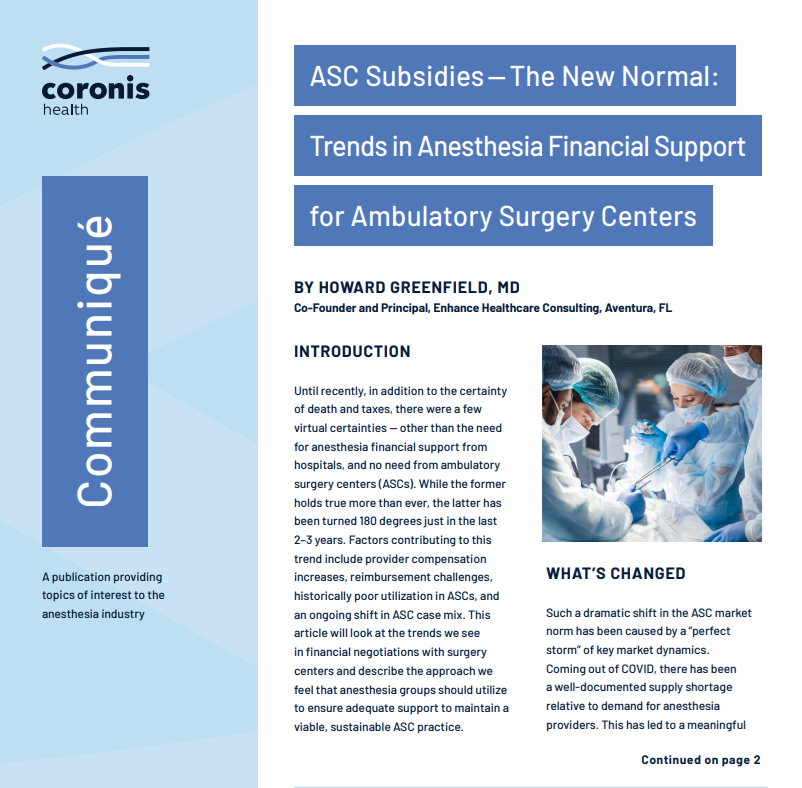
Fall 2026 Communiqué
Download the Fall 2026 Communiqué issue.

Why Revenue Gets Stuck: Finding the Operational Breakdowns That Delay Payment
Revenue cycle problems do not always come from one major failure. More often, payment is delayed by smaller operational breakdowns that happen across billing…

AI and the Revenue Cycle: What’s Actually Working Right Now
Doug Marcy, CTO of Coronis Health, shares real lessons from a year of AI deployments in revenue cycle management — including custom knowledge graphs,…
Let's discuss your transformation
Wherever you want revenue cycle operations to go, we can help!
-
step 1
Connect
Tell us about your organization, specialty and revenue transformation goals.
-
step 2
Evaluate
We'll evaluate your current state and identify strategic opportunities for improvement.
-
step 3
Transform
Together we'll implement solutions that improve performance from day one.
