
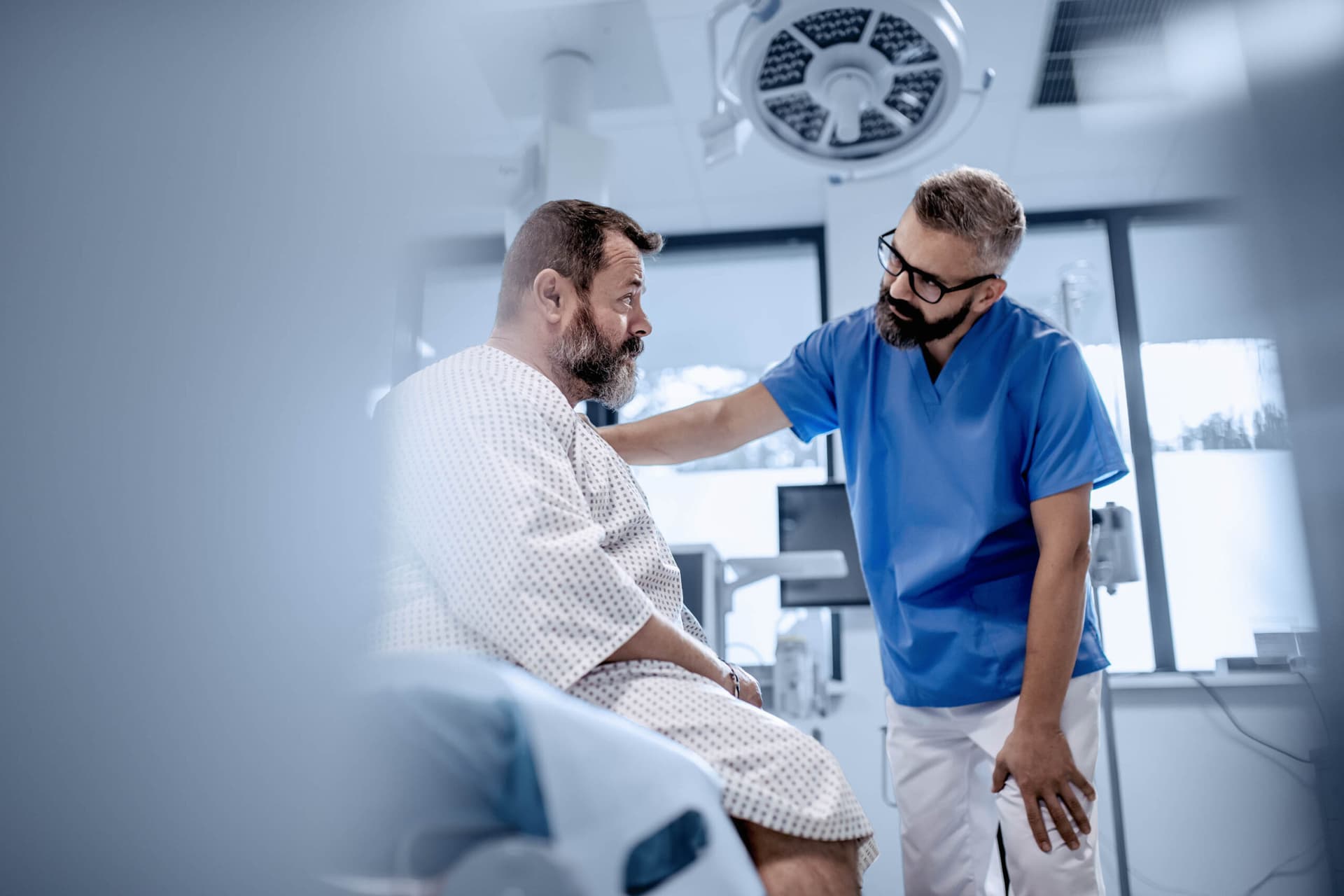
The point is, innovation is needed to make life a bit easier and less stressful. And we love finding examples of how certain hospitals or health systems have found new ways to improve the process and product. Recently, the American Hospital Association (AHA) published a story about a facility in the Windy City that found a way to slash non-urgent emergency room (ER) visits nearly in half. Much of the following is taken from that story.
A Common Occurrence
What the AHA terms “low-acuity ER visits” are a widespread happening for American hospitals and health systems. Back in April of 2024, the University of Southern Maine published a study entitled “Non-Urgent Use of Emergency Departments by Rural and Urban Adults.” The study found that about a third of ER visits across the country qualify as non-urgent, and those unnecessary and avoidable trips add an estimated $32 billion to annual healthcare spending. So, this phenomenon of using the ER as essentially a health clinic or doctor’s office is a significant problem.
Here’s a real-life example. A patient seeking a medication refill visited the ER at UChicago Medicine (UCM), a non-profit academic health system. That’s not exactly what most of us would classify as an emergency scenario involving blood infusions and crash carts. And yet many patients opt to come to the ER for conditions that could be treated better and faster at a community health center. So, how can these types of trips to the ER be reduced so that the emergency department is reserved for true emergencies?
Seeing the Solution
When there’s a problem, some simply learn to accept it as an unchangeable inconvenience. Others envision ways to resolve or at least lessen the problem. Like Einstein’s “thought experiments” and Tesla’s “free energy” tests, there are those driven to solve the seemingly insoluble. That’s what forward thinkers at the aforementioned UCM did when it came to non-urgent ER visits.
About 20 years ago, UCM launched the Medical Home and Specialty Care Connection (MHSCC) program. Its mission was and is to provide patients who visit the UCM ER in Chicago’s Hyde Park neighborhood for non-urgent reasons with education about primary care resources and help them find medical homes. For example, the patient, referenced above, who came into the ER for a drug refill, communicated that they were having challenges obtaining the refill through their usual pharmacy. MHSCC team members worked to resolve the issue and made sure the patient received their medication through their regular pharmacy. They also directed the patient to a primary care physician to manage future refills without relying on the ER.
Again, this is just one example of the impact of the MHSCC program. The initiative succeeded in reducing non-urgent ER visit rates by 45%, preventing approximately 9,487 trips to the ER and saving an estimated $2.9 million during a nine-year period, according to a 2025 study authored by UCM researchers.
A Beautiful Blueprint
For hospitals and health systems that want to similarly reduce low-acuity ER visits, UCM officials offered the following recommendations:
- Start small. It doesn’t have to be a full team. The MHSCC program expanded to UCM Ingalls Memorial Hospital in Harvey, Illinois, in 2025 and is “making a dent” with just one team member.
- Build trust on common ground. The facility should hire people who understand patient perspectives firsthand. Team members often come from the community they serve—those who understand the barriers the patient is facing.
- Bridge the gap between clinicians and community members. It helps to have professionally trained advocates who can translate medical terminology into plain language.
- Embrace evolution. There’s always going to be something that’s shifting. You have to be flexible with the ability to quickly pivot.
Laura Markin, executive director of transformation and strategy, and a co-author of the study on the MHSCC program, summed up the program’s effectiveness as follows:
It’s generations of residents who, for good reason, have not been able to trust the medical system. That’s why education is such a huge part of our program, because we want people to understand that there are places in the community that are meant for this, meant for them and will take care of their needs.
So, chalk one up for the innovators. It’s enough to give Mr. Tesla a smile.