
An Ode to Heroes
We’re over two weeks removed from the 2026 NFL Draft. One of the most interesting stories coming out of that event involves a player picked up by the Miami Dolphins: Jacob Rodriguez. Jacob started out in college as a quarterback at the University of Virginia. He didn’t see much playing time that freshman year, so he decided to transfer to Texas Tech where he ended up playing . . . (wait for it) . . . linebacker—and a dominant one at that! He was so good that he wound up finishing fifth in the Heisman Trophy tabulations. Oh yeah, and did I mention? His wife, Emma, is a Black Hawk helicopter pilot for the U.S. Army! Now, that’s a dynamic duo!
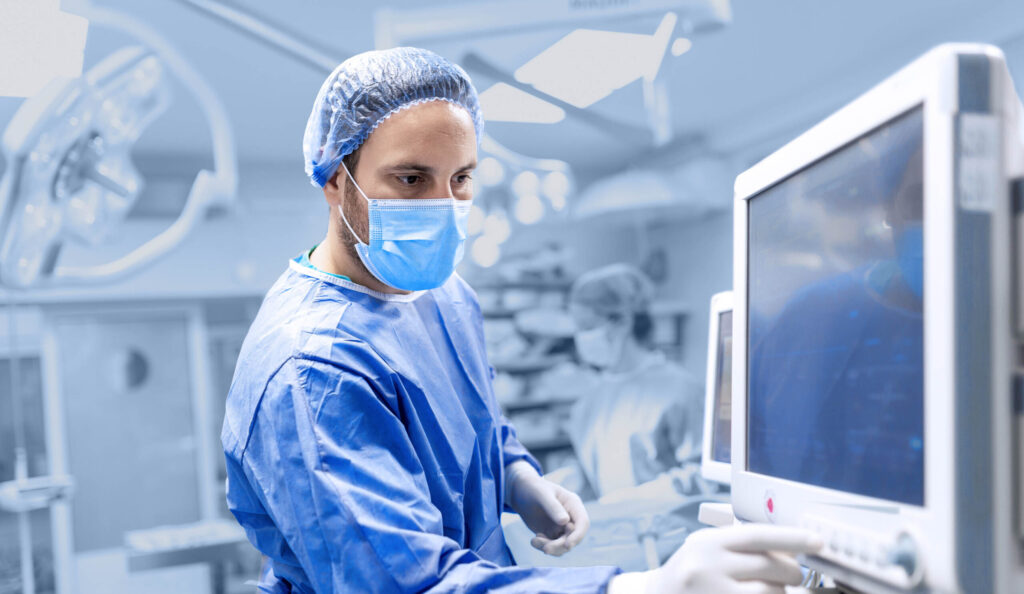
Humans embrace the heroic and mythic. We love tales of overcoming the odds, rising to the challenge and saving the day. With that in mind, it’s high time we pay tribute to the amazing men and women who go above and beyond in pursuit of patient care in hospitals and surgery centers across the country. These are America’s anesthesiologists and anesthetists, and the following provides just a few examples of our healthcare heroes in action.
One Case, Three Lives Saved
Jeff Berger, MD, MBA is an anesthesiologist in Washington, D.C. Like so many anesthesiologists, he spends a lot of time on call for both emergent surgical and labor cases. This alone—the sacrifice of sleep—is heroic. According to an account on the American Society of Anesthesiologists (ASA) website, Dr. Berger was in the labor and delivery unit one evening. He had answered a call for an emergency C-section for a mom-to-be who was unconscious and struggling to breathe. The seriousness of the situation was driven home not only by the patient’s appearance but also by the array of medical personnel standing ready to render aid: the obstetrician, the neonatologist, a pediatric nurse practitioner, midwife and resident.
Dr. Berger had seconds to decide how best to help this patient as he was alerted that there was no discernible heart beat for the baby. He called upon all of his experience to instinctively check the woman’s vital signs and safely insert a tube into her trachea so that she could breathe. Partnering with the physician obstetrician, he gave the nod that signaled permission to begin the operation and stood by to vigilantly monitor mom and baby.
The baby was rapidly delivered and let out a healthy cry. As the team turned its attention back to the mother, the obstetrician’s next words put everyone back on high alert: “There’s another baby!”
After the second baby was delivered, Dr. Berger wondered if he had acted quickly enough to prevent the patient from experiencing permanent brain damage due to inadequate breathing. But when the new mother opened her eyes and it became apparent that she would be fine, the good doctor was finally able to break into a smile.
And there was one more surprise awaiting Dr. Berger: a big hug from the twins’ new grandparents. Jeff Berger’s quick action saved three lives, and he became that family’s new-found hero.
Singing Saved the Day
A woman with a large mass was being prepped for surgery, and she was terrified. But her mood completely changed when her anesthesiologist walked in. It was a woman with an easy smile and a scrub cap covered in sunflowers. According to the patient, who recounted this story for NPR, her anesthesiologist said “OK, why don’t you think about something that you like to do?” “Well, why don’t you tell me what you like to do,” the patient responded. The anesthesiologist said that she liked to sing and proceeded to serenade the scared patient with her rendition of “Phantom of the Opera”—which is what the patient last heard as she drifted off to sleep. “It was the most lovely thing,” the patient later recalled.
In the years since, the woman has had to undergo multiple surgeries. But she still imagines that singing doctor standing by her side during every procedure, along with her reassuring voice and personal touch. The patient summed up her hero in this way:
It wasn’t just the science of medicine but the compassion to take a few moments to care for me. So I will always be grateful to her. And I don’t know her name, but thank you.
A great bedside manner is not just a medical meme; it can make a short-term difference and a long-term impression. We know that so many of our readers are doing just that every day.
Is There an EpiPen in the House?
Yuri Aronov, MD was waiting for his son at the ice rink in one of Chicago’s northern suburbs. Hundreds of people had gathered to watch the Illinois State Championship game. Another parent, who knew that Dr. Aronov was an anesthesiologist, grabbed him by the elbow and said, “Hey, Doc, someone in the lobby is not feeling well.” He went to the lobby to find a firefighter performing chest compressions (CPR) on an older gentleman. The anesthesiologist jumped in to help, while a rink employee brought in an automatic external defibrillator (AED) device.
The protocol followed was basic life support. Unfortunately, the success rate of resuscitation outside the hospital is only about 12 percent, according to 2016 data. After the second AED shock and feeling no pulse, Dr. Aronov realized that the outcome would likely prove grim. He then had an inspiration. He shouted to the crowd, “Does anyone happen to have an EpiPen?” In response, a young lady stepped forward from the crowd and presented her EpiPen. The anesthesiologist immediately jabbed it into the victim’s exposed shoulder. The firefighter paused the CPR, and a weak pulse was detected on the patient’s neck. CPR was resumed and continued until the paramedics arrived.
The following day, the patient seemed to be doing well. A few days later, the patient’s son called Dr. Aronov and emotionally thanked him for saving his father’s life.
Beyond the Spotlight
While these cases stand out as extraordinary, they reflect something even more important: this level of patient‑centered, highly skilled care is what anesthesia providers deliver every day. Anesthesiology plays a critical role in surgical safety, ensuring patients remain stable before, during and after procedures—often managing life‑sustaining functions moment to moment. Every successful surgery depends on this expertise, even though it often goes unseen.
Not everyone wears a cape—sometimes they wear scrubs, working overnight, making split‑second decisions or simply taking a moment to comfort a patient. Heroism in healthcare comes in many forms, both dramatic and quiet. Our role at Coronis Health is to stand behind those heroes, ensuring their work is accurately captured, properly supported and fully valued so they can continue focusing on what matters most: delivering exceptional patient care—because extraordinary care deserves nothing less.
Anesthesia
Explore specialty revenue cycle expertise
See how Coronis Health supports organizations with specialty-focused teams, workflows, and technology.
recommended
More Resources

Why Revenue Gets Stuck: Finding the Operational Breakdowns That Delay Payment
Revenue cycle problems do not always come from one major failure. More often, payment is delayed by smaller operational breakdowns that happen across billing…

AI and the Revenue Cycle: What’s Actually Working Right Now
Doug Marcy, CTO of Coronis Health, shares real lessons from a year of AI deployments in revenue cycle management — including custom knowledge graphs,…
FQHC RCM Case Study: Collections Increased 29%
See how FQHC RCM helped a Cleveland health center increase collections by 29%, reduce A/R by 19% and eliminate an eight-day coding backlog.
Let's discuss your transformation
Wherever you want revenue cycle operations to go, we can help!
-
step 1
Connect
Tell us about your organization, specialty and revenue transformation goals.
-
step 2
Evaluate
We'll evaluate your current state and identify strategic opportunities for improvement.
-
step 3
Transform
Together we'll implement solutions that improve performance from day one.
